
Disclosure: This post may contain affiliate links. If you purchase through these links, I may earn a small commission at no extra cost to you.
If your chicken coop smells bad or looks messy, bedding is usually the reason.
Most beginners don’t think much about bedding at first, focusing on the coop, the chickens, and the feed. Then, after a few weeks, the coop starts to smell, the floor gets damp, and eggs show up dirty. The good news is that this is an easy fix.
Once you understand how bedding works and what to use, keeping your coop clean becomes simple and predictable.
What Is Chicken Coop Bedding and Why It Matters
Chicken coop bedding is the material you spread on the floor of your coop and inside nesting boxes. It does more than look nice. It keeps your flock comfortable, warm, and healthy.
Good bedding absorbs moisture from droppings, controls odor, and helps keep your chickens dry. It also makes cleaning much easier because you are removing bedding instead of scraping waste off hard surfaces. Plus, if you are a gardener, using the mucked-out straw is one of the best things you can put in your compost pile for later garden fertilization.
If you are still setting up your coop, make sure you start with the basics in our Complete Beginner Guide to Raising Chickens, which walks through everything you need before your birds arrive.
When bedding is wrong or poorly managed, problems show up fast. Not only do you get strong smells, but you get wet spots, flies, and a higher risk of illness in your flock.
When you get your coop right, your entire setup runs smoother.
Best Bedding Options for Backyard Chickens
There is no single perfect bedding option, but a few work well for beginners.
Pine Shavings (Most Popular Choice)
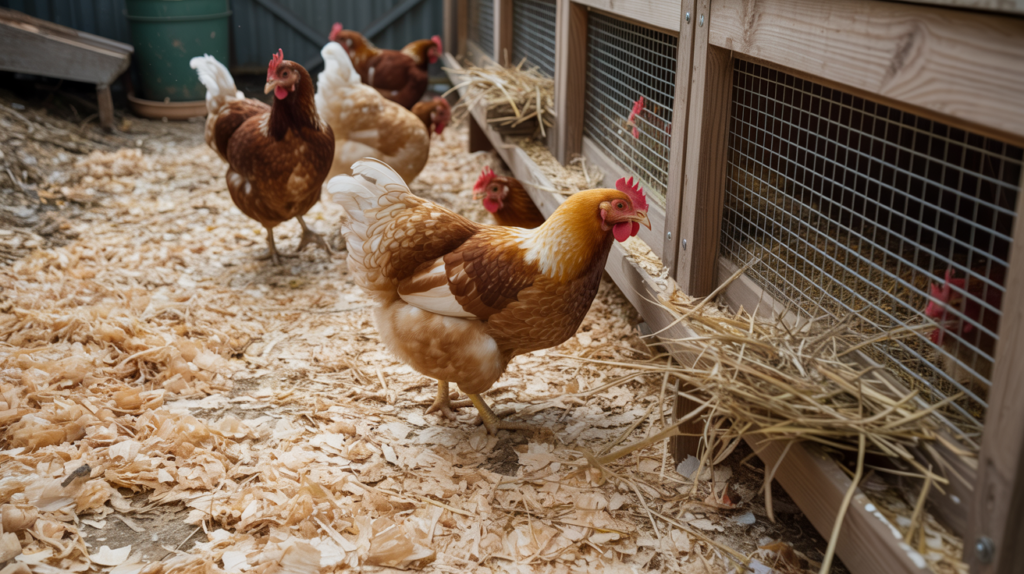
Pine shavings are the go-to bedding for most backyard chicken keepers. They are easy to find, affordable, and do a great job absorbing moisture. They also help control odor better than most other options.
Pine shavings work well on coop floors and inside nesting boxes. They are lightweight and easy to remove during cleaning, antimicrobial, and easy to find.
Avoid cedar shavings. Cedar gives off oils that can irritate a chicken’s respiratory system.
Straw
Straw is another common choice, especially in rural areas where it is easy to find.
It provides good insulation and works well in colder weather, and chickens also like to scratch through it.
The dry, hollow stems of straw absorb moisture well and are a good insulator, keeping nesting boxes dry and comfortable. This moisture-wicking keeps eggs clean and free of mold and bacteria. Straw also protects hens and their eggs from extreme cold temperatures.
Hemp Bedding
Hemp bedding is becoming more popular, especially for small backyard flocks. Its softness, absorbency, and moisture control make it a good choice for nesting boxes. It is also low-dust and lasts longer than pine shavings, meaning less cleaning. However, hemp is considerably more expensive and harder to source locally.
If you want a low-maintenance setup and do not mind spending a little more, hemp is a strong option.
Sand (Advanced Option)
Some chicken keepers use sand instead of traditional bedding. Sand drains well and does not hold moisture like wood-based bedding. It is easy to clean by scooping droppings the same way you would clean a litter box. However, sand is heavy and can be difficult to manage. It also gets cold in winter, which may not be ideal in colder climates.
For most beginners, sand is not recommended for beginner backyard chicken farmers. But if you have a little more experience or are willing to deal with the learning curve, it can work well in dry areas.
Bedding Comparison
| 🐔 Bedding Type | 👍 Pros | ⚠️ Cons | ⭐ Best For |
|---|---|---|---|
| Pine Shavings | Absorbent, controls odor, easy to find | Needs regular replacing | Most backyard setups |
| Straw | Cheap, good insulation | Can mold, not very absorbent | Cold climates |
| Hemp | Very absorbent, low dust | More expensive | Low-maintenance coops |
| Sand | Drains well, easy to clean | Heavy, cold in winter | Dry climates |
Bedding for Different Areas of the Coop
Not all areas of your setup need the same bedding.
Coop Floor
The coop floor needs bedding that absorbs moisture. controls odor, and provides cushioning for your flock. Pine shavings or hemp work best here. Aim for a layer about 2 to 4 inches deep so it can handle daily droppings.
Nesting Boxes
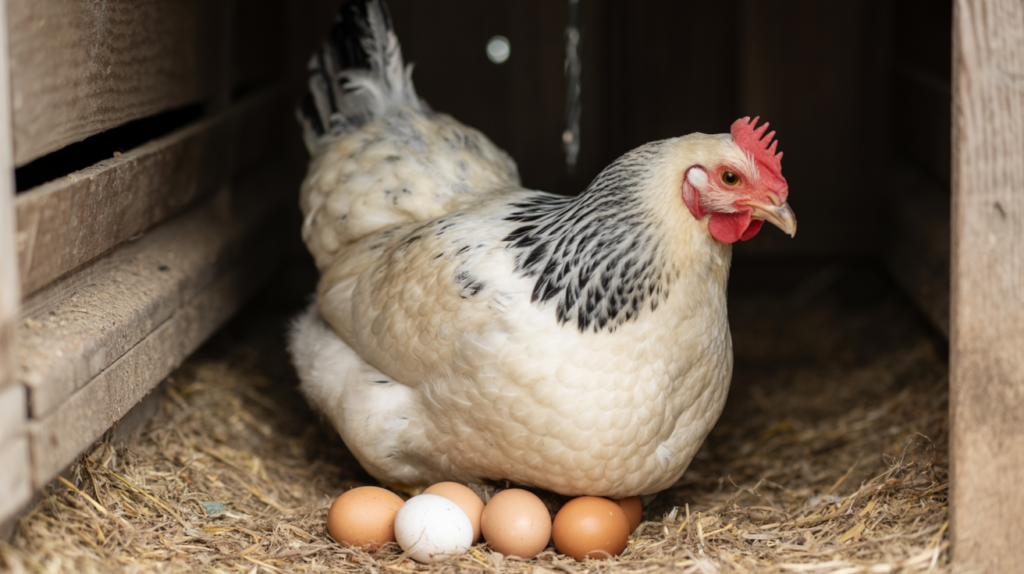
Nesting boxes should be soft, clean, and dry. Straw or pine shavings work well. The goal is to cushion eggs and keep them clean.
Check nesting boxes often and replace bedding when it becomes dirty or damp.
Chicken Run
Most chicken runs are bare dirt, but that can turn into mud quickly. Adding sand, mulch, or a layer of straw in problem areas can help control mud and improve drainage.
How Much Bedding Do You Need
You do not need to overthink this. A few inches of bedding on the coop floor is enough for most setups. Too little bedding leads to moisture buildup, and too much just wastes material.
Start with about 2 to 4 inches and adjust based on how quickly it gets dirty or damp.
How Often Should You Change Chicken Bedding
A simple routine keeps everything under control.
Light Cleaning
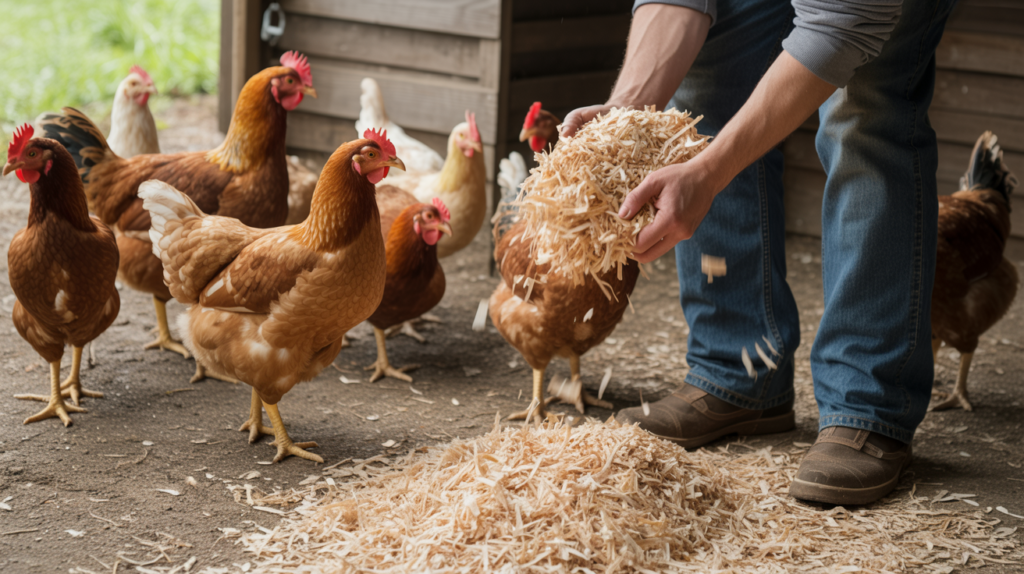
Once a week, remove obvious droppings and add a small amount of fresh bedding. This makes the weekly cleaning task much easier and keeps the coop from getting out of hand.
Full Cleaning
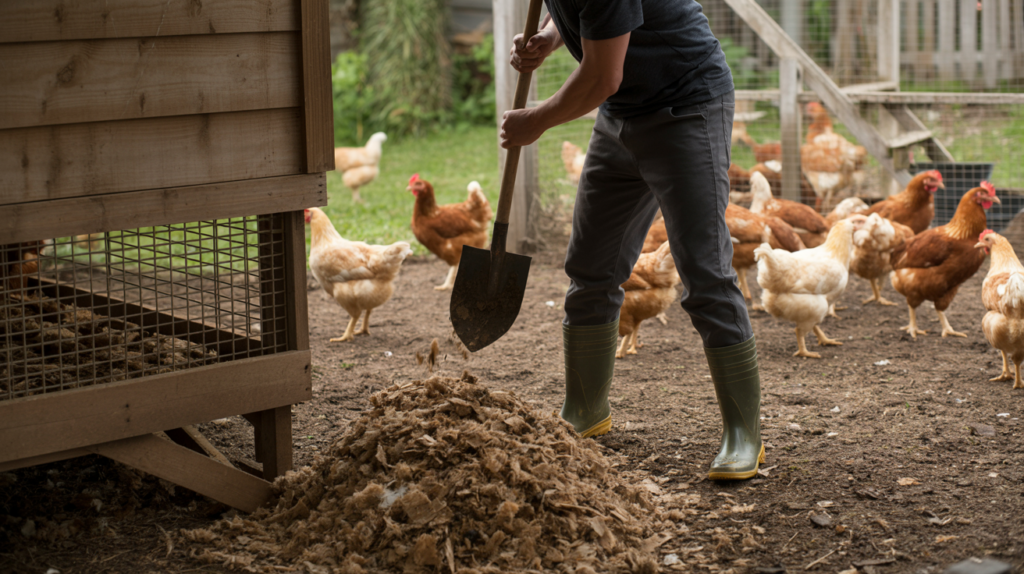
About once a month, remove all bedding and replace it with fresh material. If you notice strong smells or damp spots sooner, you may need to switch to a bi-weekly cleaning.
If you want a step-by-step walkthrough, see our guide on How to Clean a Chicken Coop (Step-by-Step for Beginners), which breaks down the process in detail.
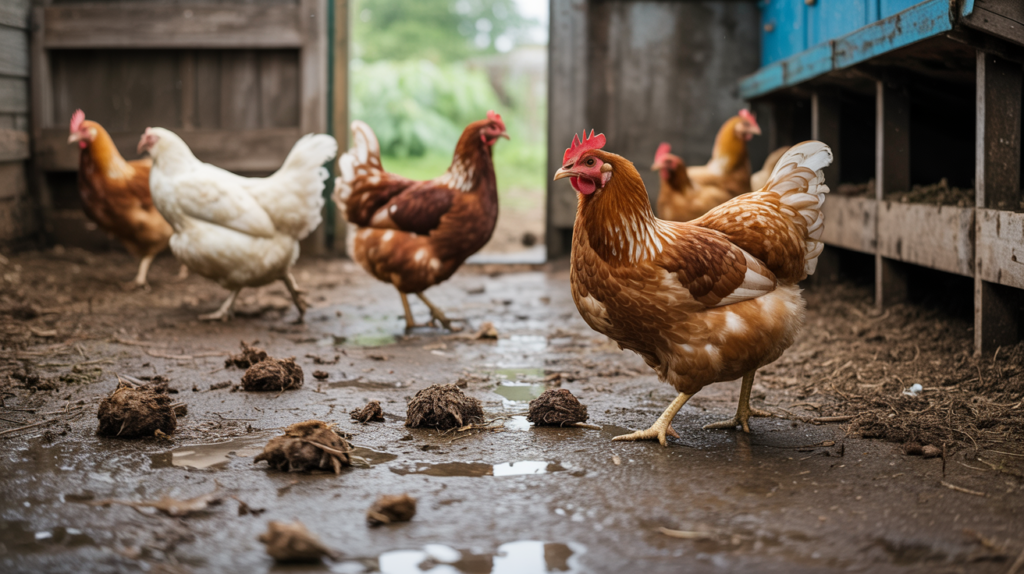
If your coop smells bad, it is almost always a moisture problem, not a bedding problem.
Improve airflow and keep bedding dry, and most odor issues go away quickly.
Common Bedding Mistakes Beginners Make
Using the wrong bedding or managing it poorly can create unnecessary problems. One common mistake is using cedar shavings. They smell nice, but they can harm your chickens. Another mistake is letting bedding stay wet. Moisture leads to odor, mold, and bacteria.
Some beginners also use too little bedding, which causes droppings to build up faster. Others go the opposite direction and rarely clean the coop, which creates strong smells and unhealthy conditions.
Ventilation also matters. Even the best bedding will not work well in a damp, poorly ventilated coop.
Deep Litter Method
You may hear about something called the deep litter method. This approach involves adding new bedding on top of old bedding over time, rather than removing it regularly. The lower layers break down naturally and can help generate a small amount of heat. It can work well, but it requires careful management and good ventilation.
The deep litter method is not recommended for first-time flock owners. For most beginners, regular cleaning is simpler and easier to control.
Frequently Asked Questions
What is the best bedding for chickens?
Pine shavings are the best all-around choice for most backyard flocks. They are affordable, absorbent, and easy to manage.
Can I use grass clippings?
Fresh grass clippings are not recommended. They can hold moisture and rot quickly, creating odor and mold.
Is sand safe for chickens?
Yes, sand is safe when used correctly. It drains well and is easy to clean, but it is not ideal for cold or wet climates and is more difficult to manage for beginners.
How do I keep bedding from smelling?
Keep bedding dry, clean it regularly, and make sure your coop has good ventilation. Moisture is the main cause of odor.
Can I compost chicken bedding?
Yes, used bedding mixed with manure makes excellent compost for gardens once it has fully broken down, which takes about a year. The spring coop litter will be ready to use the following spring.
Final Thoughts
Chicken coop bedding is one of the simplest parts of raising backyard chickens, but it makes a big difference in how your setup performs. Choose bedding that fits your climate and budget, keep it dry, and stick to a simple cleaning routine. Once you get into that rhythm, coop maintenance becomes quick and easy, and your chickens stay healthier because of it.