
Complete Beginner Guide to Raising Backyard Chickens
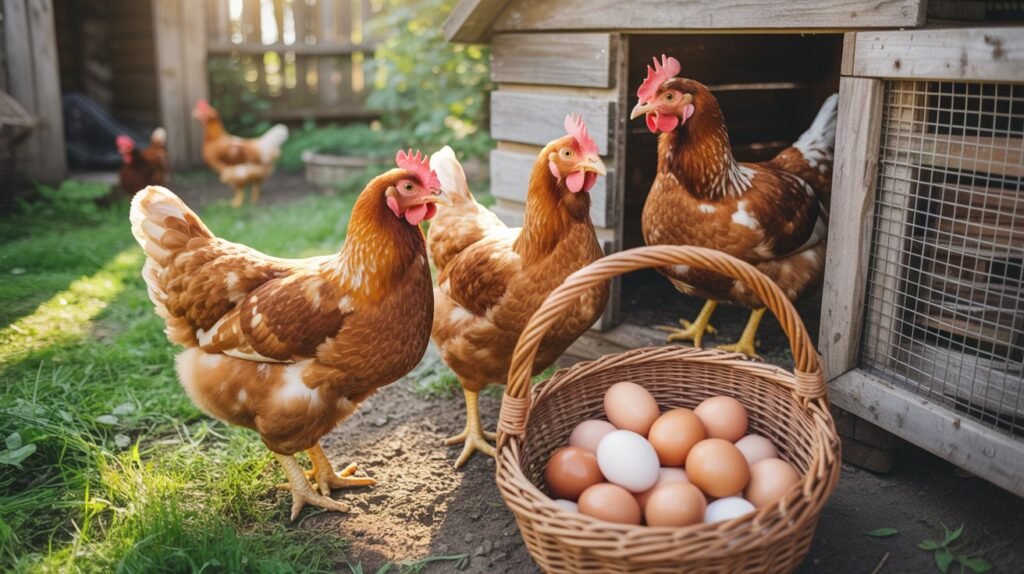
Disclosure: This post may contain affiliate links. If you purchase through these links, I may earn a small commission at no extra cost to you. Backyard chickens have gone from a rural tradition to a suburban staple. Across the United States, millions of households now keep small flocks in their yards. The reasons are practical: fresh eggs every morning, natural pest control, and a surprising amount of entertainment from birds with their own personalities. Believe me, just the idea of raising backyard chickens for the first time feels like a daunting task. If you’re wondering how to raise backyard chickens successfully, the process is actually simpler than most beginners expect. There are breeds to choose, coops to build, feed to buy, and local rules to research. This guide covers every step so you can start with confidence. Chickens are forgiving animals. Most beginners get it right, and the ones who struggle early usually do so for avoidable reasons that this guide will help you skip. Why Raise Backyard Chickens? The most obvious reason people start raising chickens for eggs is the steady supply they get from their own backyard flock. This is possibly one of the best reasons for having a productive backyard flock. A healthy hen lays roughly 250 to 300 eggs per year during her peak years, and you can’t beat food that goes directly from source to kitchen. Store-bought eggs spend days in transit before even reaching a shelf. Backyard eggs go from nest to kitchen the same day. Then there’s the plus side of the rich, dark yolks, because you control what your birds eat. The benefits of owning backyard chickens go far beyond the breakfast table. Chickens are your own personal pest control, eating beetles, grubs, ticks, and fly larvae. A small flock working through a garden bed significantly reduces pest control pressures. Plus, you have the added benefit of mixing their droppings with bedding material like straw, along with vegetables and other plant materials. These break down into one of the best garden fertilizers available. Gardeners who keep chickens often stop buying fertilizer entirely. We’ve owned chickens for years, and our children have always found them to be engaging pets. Each bird behaves differently and has a very distinct personality. Some breeds are calm and easy to handle, others are bold and curious. Children who help care for your flock learn responsibility in a concrete way, while the chickens provide a tangible return on the feed you buy. Just another reason to own a backyard flock. Check Local Laws Before Getting Chickens Before buying a single chick, spend an hour checking your local rules. Many cities and counties allow backyard chickens with restrictions, and some ban them outright. Getting this wrong means rehoming birds you have already bonded with. Here is what to look for: Your city or county website usually lists this information under zoning or animal control. A quick call to your local zoning office confirms anything unclear. This step takes less than an hour and prevents serious problems later. ⬆ Back to top How Many Chickens Should Beginners Start With? Three to six chickens is the right range for most beginners. A flock of three gives you enough eggs for a small household and enough social dynamics to observe. Six birds produce more eggs and give you a buffer if one hen stops laying or gets sick. Chickens are social animals. A single chicken kept alone will be stressed and unhappy. Two is a minimum. Three or more is better. If you want enough eggs to share with neighbors or family, four to six hens is a practical target. Here is a rough guide to weekly egg output based on flock size, assuming healthy hens of good laying breeds: 🐔 Number of Chickens 🐔 Estimated Eggs Per Week 3 12 to 15 4 16 to 20 6 24 to 30 These numbers reflect prime laying years. Production drops in winter, during molting, and as hens age past three or four years. Start with the number that fits your household needs, and plan your coop space around your target flock size. Best Chicken Breeds for Beginners 🐔 Chicken Breed 🥚 Eggs Per Year 🐔 Temperament Rhode Island Red 250–300 Hardy, confident, sometimes assertive Plymouth Rock 200–250 Friendly, calm, family-friendly Australorp 250–300 Quiet, gentle, excellent layers Buff Orpington 180–220 Very friendly, docile, great for children Sussex 230–250 Curious, active, adaptable Breed choice is a key factor in building a backyard flock. Some breeds are docile and easy to handle, while others are flighty or aggressive. For a first flock, know what the best chicken breeds for beginners are, and pick breeds known for calm temperament, consistent egg production, and adaptability to your climate. Rhode Island Red Rhode Island Reds are among the most popular backyard breeds in America. They lay large brown eggs reliably, often 250 to 300 per year. They tolerate cold well and adapt to both confinement and free-ranging. They can be assertive in the flock hierarchy but are generally manageable for beginners. I do not recommend keeping Rhode Island Red roosters, as they can be bullies in the pen. The hens can sometimes have aggressive spells, but they are worth any extra work of separating them if that happens. You just can’t beat this breed for their ability to lay large, brown eggs. Plymouth Rock Plymouth Rocks, often called Barred Rocks, are calm, friendly, and dependable. They lay around 200 brown eggs per year and handle cold weather well. They are one of the best breeds for families with children because they tolerate handling without much fuss. Australorp Australorps hold the world record for egg production: 364 eggs in 365 days from one bird, but on average, the Australorps lay 250 or more eggs per year. They are gentle, quiet, and do well in small backyards. Buff Orpington Orpingtons are the golden retrievers of the chicken world, and another favorite of mine. They are large, fluffy, calm, and friendly. And
New Chicken Coop and Pen on the “Cheep” – Step 2
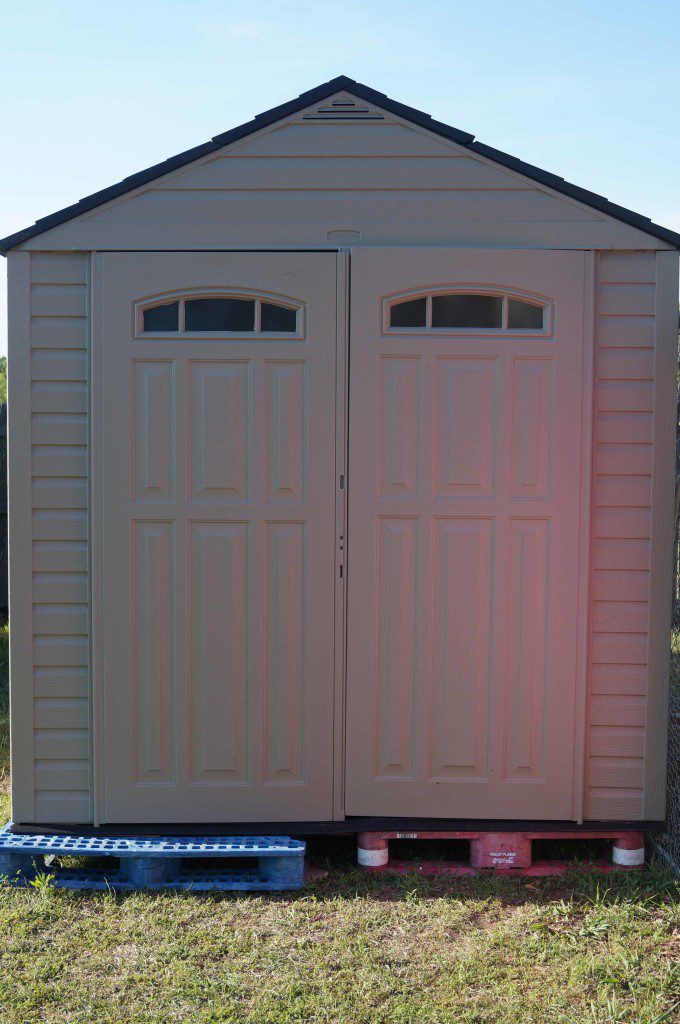
If you haven’t noticed by now, we bargain hunt, dumpster dive, repurpose and reuse; from Craig’s List to raiding dump piles along our back roads, anything is possible. Nothing is more obvious of our money saving ideas than our quest to build a new chicken pen and coop for $200 or less. I’m happy to report, we are meeting that goal. Craig’s List Find and the Plan of Action I must tell you, I’m addicted to Craig’s List; it’s a bargain hunter’s paradise. However, when using, always take extra safety precautions. We only meet sellers during daylight hours and we never go alone. A couple of weeks ago, we came across an advertisement for a Rubber Maid storage building: Like new condition with all parts including the instruction booklet…$100 or best offer. We offered $75 and have a nice, nearly new building for our chicken coop. The panels are slightly warped but will straighten out once we have the brackets and screws in. Our plan of action is simple, or at least we hope it is. The foundation of the coop is plastic pallets from hubby’s job: no charge. It has a plastic floor bottom making spring and fall super cleaning easy; just muck out then hose down. [callout title=TIP]When putting something together, read the instructions, it makes things much simpler. It’s amazing how easy it goes up when you put it together correctly.[/callout] There are four skylights in the roof, windows in each door, and vents in both the front and back peak. This will allow light for cleaning and egg gathering as well as providing ventilation. In the winter, we will cover the vents to keep it warm inside. Of course we have our supervisors during this procedure…meet Rocky, our Polish rooster. Rocky is part of the new chicks we added to our flock this year. Rocky likes to strut his stuff, but as you can see, the girls just ignore him. He isn’t crowing yet but I’m sure when he does, it will be impressive. We weren’t going to get any roosters, but Rocky and one other Polish were in the batch. We love Polish and couldn’t resist taking both of them. Cher is the female Polish (not pictured). She doesn’t have a large topknot of feathers yet like Rocky does. She is a beautiful reddish blond, much darker than her male counterpart. With the help of our excellent supervising team, we were able to get the building up in one day. Of course, if we had read the instructions first, we probably would have saved a couple of hours. Our next step is level it out so the door hangs properly, cut a hole in the side and add a ramp for the chickens to enter. The building is about 3 inches away from the fence so we need something to cover the chicken’s entrance to the building. We have an idea and will share that in our final post. We also need to finish the inside: add nesting boxes, a roost, and hang the waterer and feeder. Coming soon (hopefully next week) our final phase of Chicken Coop and Pen on the Cheep. [callout title=See How it All Began] Chicken Coop and Pen on the “Cheep” – Step 1[/callout]