
Disclosure: This post may contain affiliate links. If you purchase through these links, I may earn a small commission at no extra cost to you.
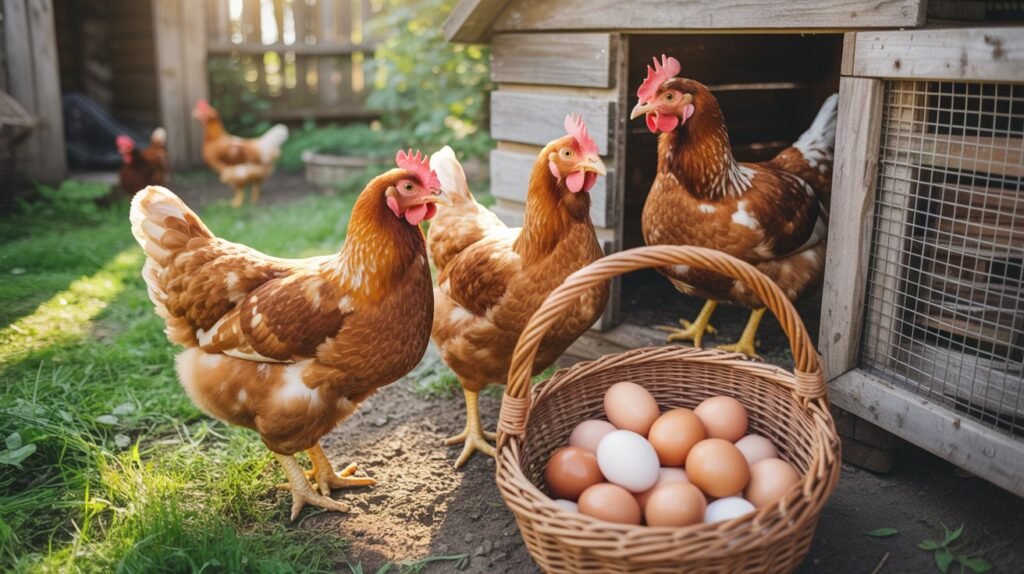
Backyard chickens have gone from a rural tradition to a suburban staple. Across the United States, millions of households now keep small flocks in their yards. The reasons are practical: fresh eggs every morning, natural pest control, and a surprising amount of entertainment from birds with their own personalities.
Believe me, just the idea of raising backyard chickens for the first time feels like a daunting task. If you’re wondering how to raise backyard chickens successfully, the process is actually simpler than most beginners expect. There are breeds to choose, coops to build, feed to buy, and local rules to research. This guide covers every step so you can start with confidence. Chickens are forgiving animals. Most beginners get it right, and the ones who struggle early usually do so for avoidable reasons that this guide will help you skip.
- Why Raise Backyard Chickens?
- Check Local Laws Before Getting Chickens
- How Many Chickens Should Beginners Start With?
- Best Chicken Breeds for Beginners
- Baby Chicks vs. Started Pullets: Which Should You Buy?
- Chicken Coop Basics for Beginners
- What Do Chickens Eat? Feeding Backyard Chickens
- Daily Care for Backyard Chickens
- Understanding Chicken Egg Production
- Common Beginner Mistakes
- Cost of Raising Backyard Chickens
- Is Raising Chickens Right for You?
- Frequently Asked Questions
- Ready to Get Started?
Why Raise Backyard Chickens?
The most obvious reason people start raising chickens for eggs is the steady supply they get from their own backyard flock. This is possibly one of the best reasons for having a productive backyard flock. A healthy hen lays roughly 250 to 300 eggs per year during her peak years, and you can’t beat food that goes directly from source to kitchen. Store-bought eggs spend days in transit before even reaching a shelf. Backyard eggs go from nest to kitchen the same day. Then there’s the plus side of the rich, dark yolks, because you control what your birds eat.
The benefits of owning backyard chickens go far beyond the breakfast table. Chickens are your own personal pest control, eating beetles, grubs, ticks, and fly larvae. A small flock working through a garden bed significantly reduces pest control pressures. Plus, you have the added benefit of mixing their droppings with bedding material like straw, along with vegetables and other plant materials. These break down into one of the best garden fertilizers available. Gardeners who keep chickens often stop buying fertilizer entirely.
We’ve owned chickens for years, and our children have always found them to be engaging pets. Each bird behaves differently and has a very distinct personality. Some breeds are calm and easy to handle, others are bold and curious. Children who help care for your flock learn responsibility in a concrete way, while the chickens provide a tangible return on the feed you buy. Just another reason to own a backyard flock.
Check Local Laws Before Getting Chickens
Before buying a single chick, spend an hour checking your local rules. Many cities and counties allow backyard chickens with restrictions, and some ban them outright. Getting this wrong means rehoming birds you have already bonded with.
Here is what to look for:
- Flock size limits. Many cities cap backyard flocks at four to six birds.
- Rooster restrictions. Most urban and suburban ordinances ban roosters entirely because of noise.
- Setback rules. Your coop may need to be set back a specific distance from property lines, neighboring homes, or your own house.
- Permit requirements. Some municipalities require a permit before you build a coop.
- HOA rules. If you live in a neighborhood with a homeowners’ association, check their covenants separately from city rules.
Your city or county website usually lists this information under zoning or animal control. A quick call to your local zoning office confirms anything unclear. This step takes less than an hour and prevents serious problems later.
How Many Chickens Should Beginners Start With?
Three to six chickens is the right range for most beginners. A flock of three gives you enough eggs for a small household and enough social dynamics to observe. Six birds produce more eggs and give you a buffer if one hen stops laying or gets sick.
Chickens are social animals. A single chicken kept alone will be stressed and unhappy. Two is a minimum. Three or more is better. If you want enough eggs to share with neighbors or family, four to six hens is a practical target.
Here is a rough guide to weekly egg output based on flock size, assuming healthy hens of good laying breeds:
| 🐔 Number of Chickens | 🐔 Estimated Eggs Per Week |
|---|---|
| 3 | 12 to 15 |
| 4 | 16 to 20 |
| 6 | 24 to 30 |
These numbers reflect prime laying years. Production drops in winter, during molting, and as hens age past three or four years. Start with the number that fits your household needs, and plan your coop space around your target flock size.
Best Chicken Breeds for Beginners
| 🐔 Chicken Breed | 🥚 Eggs Per Year | 🐔 Temperament |
|---|---|---|
| Rhode Island Red | 250–300 | Hardy, confident, sometimes assertive |
| Plymouth Rock | 200–250 | Friendly, calm, family-friendly |
| Australorp | 250–300 | Quiet, gentle, excellent layers |
| Buff Orpington | 180–220 | Very friendly, docile, great for children |
| Sussex | 230–250 | Curious, active, adaptable |
Breed choice is a key factor in building a backyard flock. Some breeds are docile and easy to handle, while others are flighty or aggressive. For a first flock, know what the best chicken breeds for beginners are, and pick breeds known for calm temperament, consistent egg production, and adaptability to your climate.
Rhode Island Red
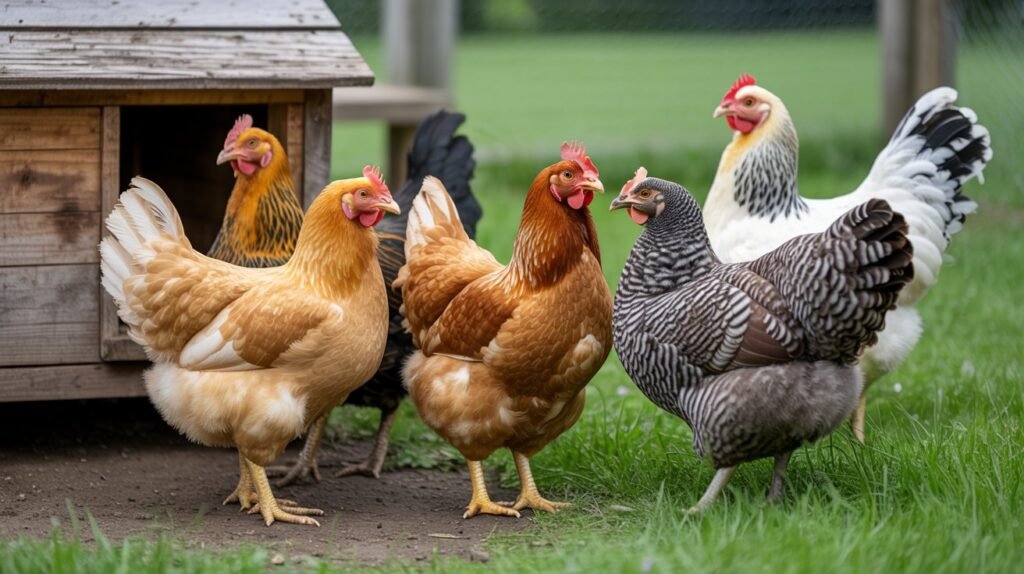
Rhode Island Reds are among the most popular backyard breeds in America. They lay large brown eggs reliably, often 250 to 300 per year. They tolerate cold well and adapt to both confinement and free-ranging. They can be assertive in the flock hierarchy but are generally manageable for beginners.
I do not recommend keeping Rhode Island Red roosters, as they can be bullies in the pen. The hens can sometimes have aggressive spells, but they are worth any extra work of separating them if that happens. You just can’t beat this breed for their ability to lay large, brown eggs.
Plymouth Rock
Plymouth Rocks, often called Barred Rocks, are calm, friendly, and dependable. They lay around 200 brown eggs per year and handle cold weather well. They are one of the best breeds for families with children because they tolerate handling without much fuss.
Australorp
Australorps hold the world record for egg production: 364 eggs in 365 days from one bird, but on average, the Australorps lay 250 or more eggs per year. They are gentle, quiet, and do well in small backyards.
Buff Orpington
Orpingtons are the golden retrievers of the chicken world, and another favorite of mine. They are large, fluffy, calm, and friendly. And even though they are large birds, I consider them among the best to have around children.
Buffs lay around 200 brown eggs per year and go broody more often than other breeds, meaning they will try to hatch eggs. This can be charming or inconvenient, depending on your goals.
Sussex
Sussex chickens are curious, friendly, and good layers of about 250 light brown eggs per year. They are one of the more heat-tolerant breeds on this list, which matters if you live in a warm climate, as I do. Oklahoma summers can get extremely hot and humid, so if you live in this type of climate, check out the other heat-tolerant birds I discuss in Chicken Breeds For Hot Climates.
Baby Chicks vs. Started Pullets: Which Should You Buy?
You can start your flock with day-old chicks or with pullets, which are young hens between eight and twenty weeks old. There are some tradeoffs for each choice.
Baby Chicks
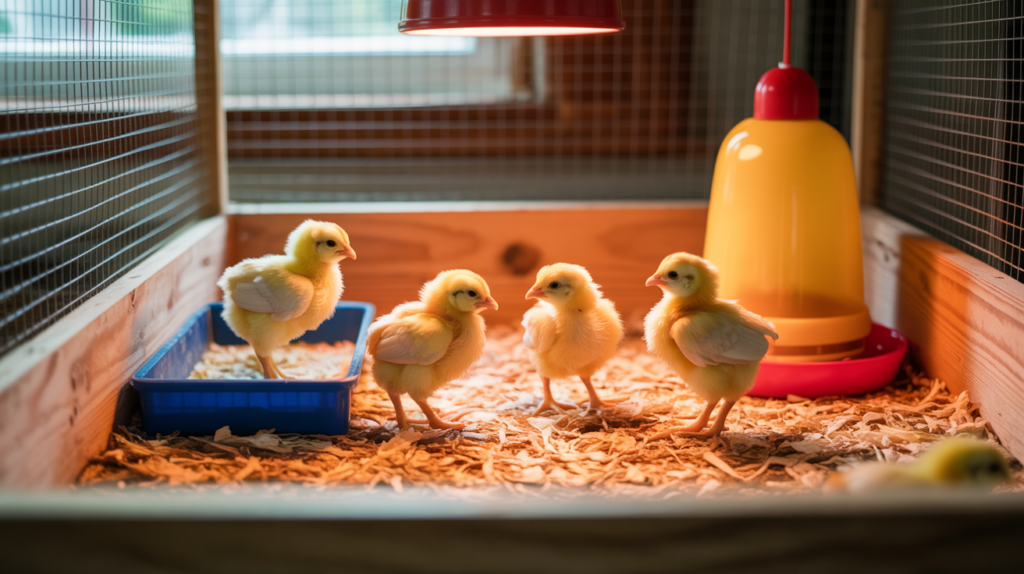
Chicks cost $3 to $10 each, depending on the breed and source. They require a brooder, which is a warm, enclosed space with a heat lamp or brooder plate, for the first six to eight weeks. Watching chicks grow is rewarding, and birds raised from chicks often become friendlier toward people.
The main downside is time. Baby chicks take 18 to 24 weeks to reach laying age. If you start with chicks in early spring, you may not see your first egg until late summer or fall.
Chicks also require more daily attention and are more vulnerable to temperature swings. I have a spare bathroom that I turn into a chick nursery during the spring. It is a small bathroom, which means it is easy to heat. We drag in a small stock tank, whose bottom is lined with straw and shredded craft paper. Just attach a heat lamp to the edge, add a shallow water bowl and a food bowl, and your babies have a nice, cozy home for the next few weeks.
Started Pullets
Pullets cost more, often $15 to $30 each, but they are close to laying age. A pullet purchased at 16 weeks may start laying within a month or two. They skip the brooder stage entirely, which simplifies setup for beginners.
The tradeoff is cost and, sometimes, temperament. Pullets handled less during early development can be skittish. When buying from a hatchery or farm that socializes its birds, this is less of a concern.
For most first-time chicken keepers, started pullets offer a gentler introduction. For those who want the full experience and have time, chicks are more satisfying. Honestly, there is something about bonding with new hatchlings and watching them grow.
Chicken Coop Basics for Beginners
Understanding proper chicken coop size requirements is one of the most important parts of raising backyard chickens. Your coop is your flock’s shelter, sleeping space, and egg-laying station. It doesn’t need to be elaborate, but it must meet a few non-negotiable requirements.
Space Requirements
Crowded chickens quickly become stressed, aggressive, and more prone to disease. Use these numbers as your minimum planning targets:
| 🐔 Area | 🐔 Minimum Space Per Chicken |
|---|---|
| Indoor coop | 3 to 4 square feet |
| Outdoor run | 8 to 10 square feet |
More space is always better. If you plan a flock of six, aim for a coop of at least 24 square feet and a run of at least 60 square feet. If you allow your chickens to free-range during the day as I do, you need less run space. But you still need a secure run for mornings, evenings, and days when you cannot supervise them.
Essential Coop Features
Every functional coop needs nesting boxes, roosting bars, ventilation, and predator protection.
Nesting boxes provide hens with a quiet, dark spot to lay eggs. One box serves three to four hens, and a 12-inch-by-12-inch box works for most breeds. Line it with straw or wood shavings, and your hens are good to go.
Roosting bars let chickens sleep off the ground, which is their natural preference. Allow 8 to 10 inches of bar space per bird. Position bars higher than nesting boxes so hens do not sleep in the boxes and soil them.
Ventilation prevents moisture and ammonia buildup inside the coop. Vents near the roofline allow air to move without creating drafts directly on roosting birds. Poor ventilation causes respiratory disease far more often than cold temperatures do.
Predator protection is not optional. Raccoons, foxes, coyotes, hawks, and even neighborhood dogs will kill chickens if given the chance. These are some of the most common chicken predators backyard flocks face.
| 🐔 Predator | ⏰ When They Attack | 🛡️ How to Protect Your Chickens |
|---|---|---|
| Raccoons | Night | Use hardware cloth, secure latches, and lock the coop every night |
| Foxes | Day or night | Bury wire apron around the run and secure fencing |
| Hawks | Daytime | Provide overhead netting or covered runs |
| Coyotes | Night and early morning | Use tall fencing and predator-proof coop construction |
| Snakes | Night | Seal small openings and collect eggs daily |
| Neighborhood Dogs | Daytime | Use sturdy fencing and supervise free-range chickens |
Make a predator-proof chicken coop by installing hardware cloth with half-inch openings instead of standard chicken wire. Bury the apron of your run at least 12 inches underground to stop diggers like foxes, raccoons, skunks, and dogs.
What Do Chickens Eat? Feeding Backyard Chickens
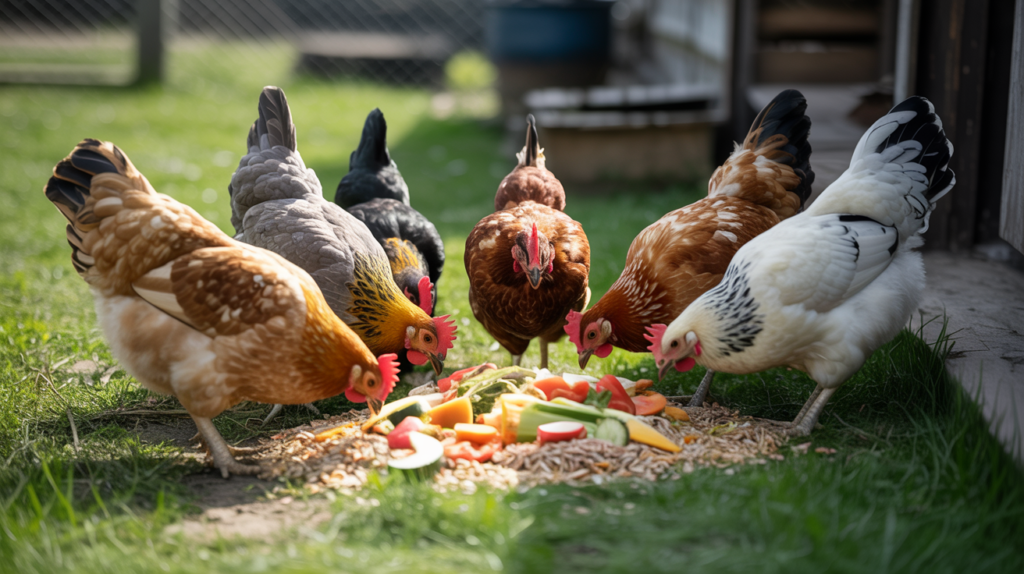
What do chickens eat? Depending on the owner, chickens may eat a formulated feed as their primary diet. For those of us who let our chickens free range or prefer a more natural diet, greens make up a large portion of their diet. However, for this section, I will discuss commercial feed.
The type of feed depends on your birds’ age and purpose, as feeds are not necessarily one-size-fits-all.
- Chick starter for birds from hatchling to about 8 weeks. High in protein (18 to 20 percent) to support fast growth.
- Grower feed for pullets from 8 to 18 weeks. Lower protein than starter.
- Layer feed for hens from 18 weeks onward. Contains added calcium for eggshell production.
Fresh water is just as important as feed. A chicken that runs low on water for even a few hours can drop egg production for days. Cleaning and refilling waterers daily is vital for chicken health and egg quality.
Calcium supplementation helps hens produce strong shells. Crushed oyster shell offered in a separate dish lets each hen take what she needs. Do not add oyster shell to feed directly. If chickens need calcium, they will eat the oyster shell.
Kitchen scraps can supplement their diet, but they still need a commercial feed for optimal health. Chickens enjoy vegetables, fruit, cooked grains, and most garden trimmings. Avoid avocado, chocolate, raw beans, and anything moldy. For a complete list, see our guide on what not to feed chickens, since some foods can be toxic to backyard flocks.
| 🐔 Food Type | 🥕 Safe for Chickens | ⚠️ Avoid Feeding |
|---|---|---|
| Vegetables | Lettuce, kale, carrots, cucumbers, squash | Raw potatoes, green potato peels |
| Fruits | Apples (no seeds), berries, watermelon, grapes | Avocado |
| Grains | Cooked rice, oats, corn, barley, wheat | Moldy grains |
| Protein | Mealworms, cooked eggs, fish scraps | Raw dried beans |
| Kitchen Scraps | Cooked vegetables, bread in moderation | Chocolate, salty foods, spoiled food |
Scraps should make up no more than 10 percent of their total diet. Too many scraps displace the balanced nutrition in their feed and can reduce egg production. Learn more in my guide, What Do Chickens Eat? A Complete Feeding Guide for Backyard Chickens.
Daily Care for Backyard Chickens
One of the biggest surprises for new chicken keepers is how little time chickens actually require each day. A consistent routine takes 10 to 20 minutes most days.
Daily Tasks
- Refill feed and water.
- Collect eggs. Regular egg collection helps avoid chickens eating their eggs.
- Do a quick visual check. Are all birds moving around normally? Any signs of injury, lethargy, or unusual droppings?
Weekly Tasks
- Remove soiled bedding from the coop floor and nesting boxes.
- Add fresh bedding material.
- Check the coop structure for gaps, loose boards, or signs of predator activity.
Monthly Tasks
- Deep clean the coop. Remove all bedding, scrub surfaces, and let the coop dry before adding fresh material.
- Spray with a disinfecting solution of equal parts water, white vinegar, and lemon juice.
- Deodorize and control pests and moisture with dry garden lime or diatomaceous earth (DE).
- Inspect roosting bars and nesting boxes for mites or lice.
- Check waterers and feeders for cracks or buildup.
The deep clean takes the most time, roughly one to two hours depending on coop size. Everything else fits easily into a normal morning before work.
Understanding Chicken Egg Production
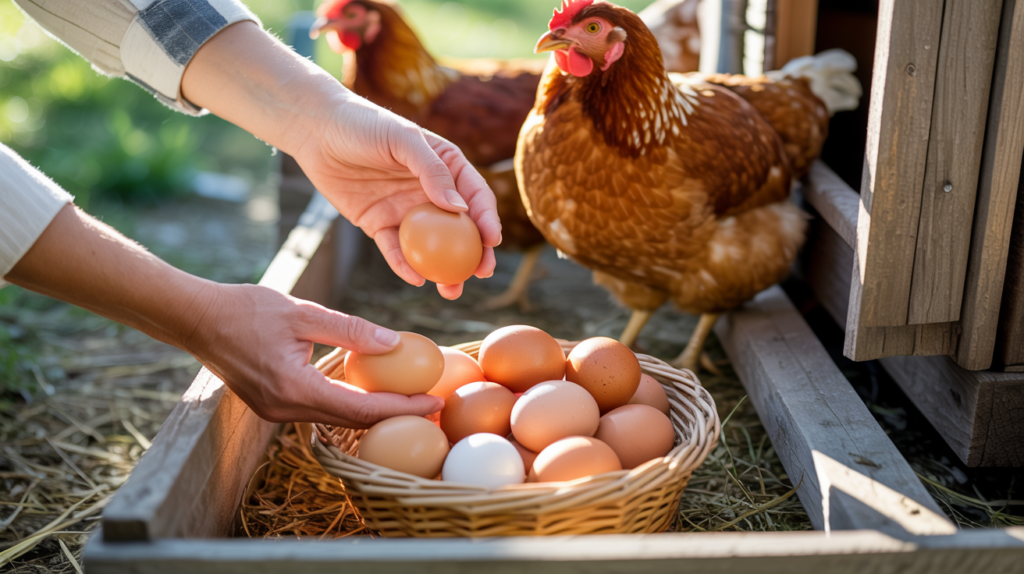
Most pullets start laying between 18 and 24 weeks of age, which answers the common beginner question, “When do chickens start laying eggs?” Breeds like Australorps and Rhode Island Reds tend toward the earlier end of that range. Heavy breeds like Orpingtons often take a few weeks longer.
| 🐔 Chicken Breed | 🥚 Age When Laying Starts | 🥚 Average Eggs Per Year |
|---|---|---|
| Rhode Island Red | 18–20 weeks | 250–300 |
| Plymouth Rock | 20–22 weeks | 200–250 |
| Australorp | 18–20 weeks | 250–300 |
| Buff Orpington | 22–24 weeks | 180–220 |
| Sussex | 20–22 weeks | 230–250 |
Egg production peaks in the first year and then declines gradually. A two-year-old hen lays about 20 percent fewer eggs than a one-year-old. By year four or five, production drops significantly, and you are left wondering, “Why did my chickens stop laying eggs?” Most backyard keepers keep hens past peak production because they are pets as much as producers. And if you’re like me, it is just as easy to take care of twenty chickens as it is ten.
Seasonal changes affect laying. Hens need roughly 14 to 16 hours of light per day to maintain consistent production. As days shorten in fall and winter, laying slows or stops. Some keepers add supplemental lighting in the coop to maintain winter production. A simple timer-controlled light that extends the day to 16 hours works well.
Molting is an annual event where hens shed and regrow their feathers. It typically happens in the fall and lasts 6 to 12 weeks. Hens stop laying during molt and focus their protein intake on feather regrowth. Do not be alarmed when your coop looks like a pillow fight happened inside. It is normal.
Common Beginner Mistakes
Most early problems with backyard chickens come from a short list of predictable errors. Avoid these, and your first year will be much smoother.
Starting With Too Few Chickens
Two chickens are technically possible, but a flock of two leaves you with no eggs if one bird stops laying or dies. Start with at least three, and four is better. I have fifty, but I also have the space, and I live outside of town where there are no restrictions.
Underestimating Coop Space
The minimum space guidelines above are true minimums. Many beginners build a coop for three chickens and then buy six. Crowded coops lead to pecking, stress, and disease. Build for the flock you want, not the flock you have today, because it is much better to have too much space than not enough.
Underestimating Predator Risk
One raccoon can kill an entire flock in a single night. Hardware cloth, secure latches, and a buried run apron are not optional extras. Build predator protection into your initial coop setup, not as an afterthought, after you lose a bird.
Overfeeding Scraps
Kitchen scraps are a fun way to interact with your flock, but too many displace balanced nutrition. Stick to the 10 percent rule and keep layer feed as the foundation of their diet.
Skipping Winter Planning
Chickens handle cold remarkably well, but waterers freeze, and ventilation needs adjustment in winter. Plan for heated water dishes and draft-free ventilation before cold weather arrives.
Cost of Raising Backyard Chickens
Startup costs vary widely depending on whether you build a coop yourself or buy a ready-made one. Here is a realistic breakdown:
| 🐔 Item | 🐔 Estimated Cost |
|---|---|
| Chicks (per bird) | $5 to $10 |
| Started pullets (per bird) | $15 to $30 |
| Coop (pre-built) | $300 to $800 |
| Coop (DIY materials) | $100 to $300 |
| Brooder setup (for chicks) | $30 to $80 |
| Feed (monthly, 4–6 hens) | $20 to $40 |
| Bedding (monthly) | $10 to $20 |
A flock of four hens produces roughly 60 to 80 eggs per month at peak. At $4 to $6 per dozen for quality eggs at the store, that is $20 to $40 in monthly egg value. Ongoing feed and bedding costs run about $30 to $60 per month. The math is closer than many expect, but most backyard keepers find the quality, convenience, and enjoyment worth more than the financial calculation.
Is Raising Chickens Right for You?
Chickens require daily care. If you travel often or have an unpredictable schedule, you cannot leave for a four-day weekend without arranging for someone to feed, water, and collect eggs. Factor in the cost and logistics of a reliable chicken sitter.
Noise is often a concern for neighbors. Hens are not silent. They cluck and cackle after laying, with the occasional squabble thrown in, but the sound is manageable. Roosters are another matter entirely. Most urban ordinances ban them, and most beginners do not need one.
Predators are a genuine risk in any setting, including dense suburbs. Hawks take birds during the day. Raccoons work at night. A secure coop and run address both threats, but you need to commit to maintaining that security daily.
If you can handle daily care, a one-time predator-proof coop investment, and the occasional veterinary question, backyard chickens will repay that effort with fresh eggs, natural garden help, and entertainment that is hard to describe until you experience it. Start small. Three or four hens are enough to learn the basics and decide whether a larger flock makes sense for your household.
Frequently Asked Questions
Do chickens need a rooster to lay eggs?
No. You only need a rooster if you want fertilized eggs that can hatch into chicks.
How many eggs do chickens lay per week?
A healthy hen of a good laying breed produces four to six eggs per week during peak season. Production slows in winter and during molting.
How much does it cost to raise chickens?
Startup costs range from $200 to $1,000, depending on coop choice and flock size. Ongoing costs run $30 to $60 per month for a small flock.
Are backyard chickens noisy?
Hens make moderate noise, most notably after laying. The sound is comparable to a quiet dog. Roosters are significantly louder and are banned in most residential areas.
How long do chickens live?
Most backyard hens live five to ten years. Laying production declines after year three or four, but many keepers maintain older hens as pets.
Ready to Get Started?
Chickens are one of the most beginner-friendly livestock you can keep. The learning curve is short, the daily commitment is modest, and the rewards are real. Start with three to six hens of a friendly, productive breed. Build a secure coop before your birds arrive. Set up your routine in the first week, and it will feel automatic within a month.
The next step is picking your breeds. Read our guide to the Best Chicken Breeds for Backyard Flocks for a deeper look at which birds fit your climate, space, and egg goals.