
Deviled Eggs Ranch Style
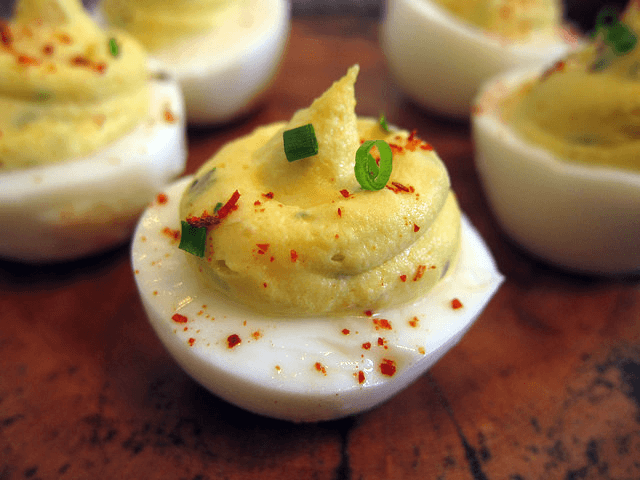
Deviled Eggs Ranch Style Recipe Type: Side Cuisine: American Author: Nancy Prep time: 15 mins Total time: 15 mins Serves: 24 Egg Halves Are you looking for something different to take to the next family get together? Our Ranch Style Deviled Eggs are just what you need. Ingredients 12 hard boiled eggs 6 tablespoons mayonnaise 1 tablespoon sour cream 1 teaspoon Dijonnaise mustard 2 teaspoons dry ranch dressing mix 1 tablespoon chives, chopped Instructions Cool hard boiled eggs in ice water then peel off shells. Slice eggs in half lengthwise. Remove yolks and place in small bowl. Place egg white halves in serving dish. Mash yolks with a fork until they are crumbly. Add mayonnaise, sour cream and Dijonnaise mustard and mix until yolks are creamy. Add dry ranch dressing mix and half of chives and mix well. Spoon mixture into small zip-lock bag, seal closed, and cut off tip of one corner of the bag, about ¼ to ½ inch or large enough for yolk mixture to flow through easily. Squeeze yolk mixture from bag into to egg white halves, much like you would use a pastry bag. Sprinkle tops of filled egg white halves with remaining chives. Refrigerate eggs for 1 to 2 hours or until well chilled. Can be made 12-24 hours before serving, just cover and refrigerate. 3.2.2925
Cheesy Bacon Deviled Eggs
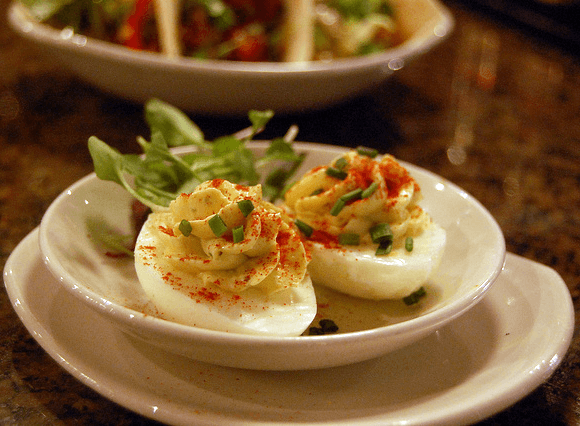
Cheesy Bacon Deviled Eggs Recipe Type: Side Cuisine: American Author: Nancy Prep time: 15 mins Total time: 15 mins Serves: 24 Egg Halves Two of our favorite flavors combine for a delightful change to an old favorite. Ingredients 12 hard boiled eggs ¼ cup mayonnaise ¼ cup sour cream 2 teaspoons Dijonnaise mustard ½ – 1 teaspoon pickle juice ¼ cup cooked bacon, crumbled ¼ cup cheddar cheese, shredded 2 tablespoons fresh chives, finely chopped 1/8 teaspoon garlic powder Paprika Instructions Cool hard boiled eggs in ice water then peel off shells. Slice eggs in half lengthwise. Remove yolks and place in small bowl. Place egg white halves in serving dish. Mash yolks with a fork until they are crumbly. Add mayonnaise, yellow mustard, and pickle juice and mix until yolks are creamy. Add garlic powder, salt and pepper, bacon, cheese, and chives and mix well. Spoon mixture into small zip-lock bag, seal closed, and cut off tip of one corner of the bag, about ¼ to ½ inch or large enough for yolk mixture to flow through easily. Squeeze yolk mixture from bag into to egg white halves, much like you would use a pastry bag. Sprinkle tops of filled egg white halves with paprika. Refrigerate eggs for 1 to 2 hours or until well chilled. 3.2.2925
Deviled Eggs Classic Style
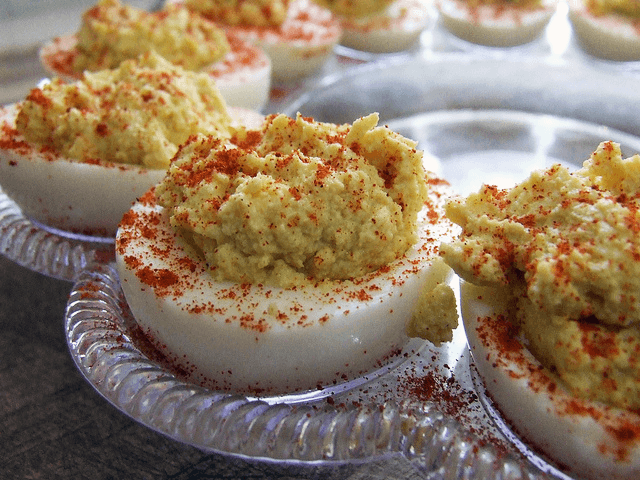
Deviled Eggs Classic Style Recipe Type: Side Cuisine: American Author: Nancy Prep time: 15 mins Total time: 15 mins Serves: 24 egg halves If you prefer the traditional, this recipe is for you. Made with mayonnaise, yellow mustard, and my secret ingredient, pickle juice, this recipe will become your family’s favorite too. Ingredients 12 large hard boiled eggs 6 tablespoons mayonnaise 2 teaspoons yellow prepared mustard ½ – 1 teaspoon dill pickle juice (to taste) 1/8 teaspoon garlic powder Paprika Instructions Cool hard boiled eggs in ice water then peel off shells. Slice eggs in half lengthwise. Remove yolks and place in small bowl. Place egg white halves in serving dish. Mash yolks with a fork until crumbly. Add mayonnaise, yellow mustard, and dill pickle juice and mix until yolks are creamy. Add garlic powder, salt and pepper and mix well. Spoon mixture into small zip-lock bag, seal closed, and cut off tip of one corner of the bag, about ¼ to ½ inch or large enough for yolk mixture to flow through easily. Squeeze yolk mixture from bag into to egg white halves, much like you would use a pastry bag. Sprinkle tops of filled egg white halves with paprika. Refrigerate eggs for 1 to 2 hours or until well chilled. 3.2.2925
Chicken Cordon Bleu
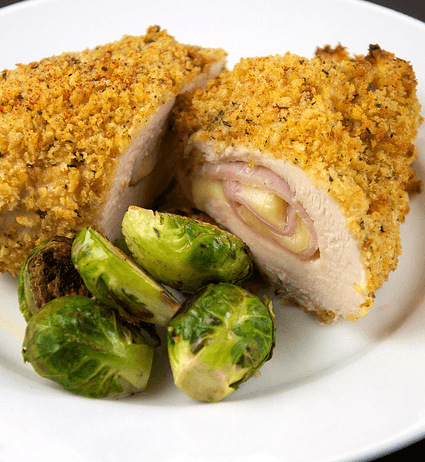
Chicken Cordon Bleu Recipe Type: Main Author: Nancy A flavor combination of chicken, smoked ham, and gooey cheese, this dish is sure to be a hit with everyone. Ingredients 4 boneless, skinless chicken breasts 8 slices smoked deli ham 8 slices Swiss cheese 1 cup buttermilk 2 cups cornflake crumbs 1/2 cup all-purpose flour 1 teaspoon salt 1 teaspoon ground black pepper 1 teaspoon garlic powder 1 teaspoon paprika 4-6 tablespoons melted butter – optional Instructions Preheat oven to 350 and lightly spray baking pan with cooking spray. In large bowl, mix together cornflake crumbs, flour, and seasonings and set aside. With meat mallet, pound out chicken breasts to a 1/4 inch thickness. On one half of the breast, place 2 slices of ham, and 2 slices of Swiss cheese. Fold other half of chicken breast over cheese and ham. Pour buttermilk into medium bowl. Dip each breast in buttermilk, coating all sides and shake off excess milk. Dredge chicken breasts in cornflake mixture and place in baking pan. Brush with melted butter, cover with foil and bake 30 minutes. Turn oven to 400, remove foil and bake an additional 10 minutes or until lightly brown. Serving size: 4 ounces Calories: 621.99 Fat: 24.64 Saturated fat: 13.82 Unsaturated fat: 8.76 Trans fat: .47 Carbohydrates: 49.59 Sugar: .62 Sodium: 887.11 Fiber: 1.85 Protein: 47.93 Cholesterol: 149.87 3.2.2925
Deviled Egg Recipes
What backyard chicken farmer cook book is complete without deviled egg recipes? They are a versatile dish for parties, a family get together, pot luck dinner, or just a side dish for supper.
How to Roast a Chicken – The Better Way
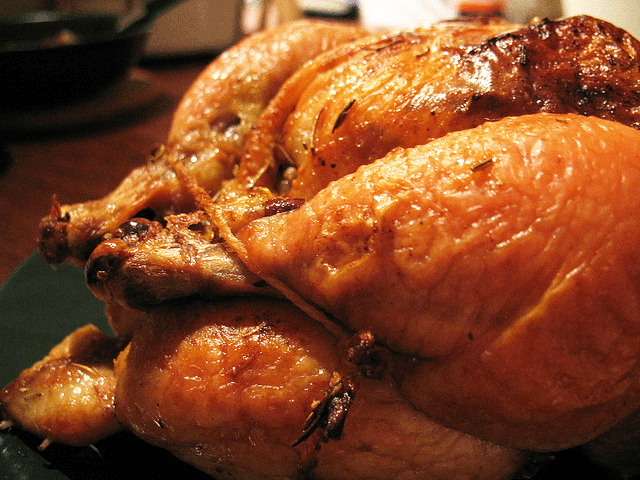
Roast a Chicken – The Better Way The Backyard Chicken Farmer Recipe Corner wouldn’t be complete without instructions for how to roast a chicken the better way. Or what I consider the better way. I learned how to roast chicken from my grandmother, who lived most of her life on my grandfather’s chicken farm. This was a small local farm where all the animals were cared for and raised humanely, unlike the huge commercial farms today. We always had fresh eggs and chickens raised organically, without synthetic growth hormones and antibiotics. Chicken and fresh eggs were a staple cooking ingredient on the farm, but my all out favorite dish was the Sunday roast chicken dinner. That golden, crusty delicious goodness was a family tradition handed down for generations. To this day, I continue the tradition and follow Grandma’s most important instruction: “Keep it simple, follow my instructions exactly, and your family won’t want anyone else’s roast chicken.” Boy was she right. What Tools You Need to Roast a Chicken There are 3 must have items to roast a better chicken. Without these tools, your chicken isn’t going to turn out the way it’s supposed to. Roasting Rack Roasting Pan (large enough to hold roasting rack) Cooking Twine (use twine made for cooking) When choosing a roasting pan and rack, pick the best you can afford. If you can spend the money for a better set, you will be glad you did. Calphalon Roasting Set I use the set by Calphalon. It is tri-ply stainless steel with a non-stick rack and provides great even heating. The roasting pan is a workhorse. Just make sure to follow the instructions when using it. Let’s Start Roasting Let chicken set at room temperature for 45 minutes to an hour before cooking. Putting chicken straight from the refrigerator to the oven toughens the meat and adds considerable time to the cooking. Remove giblets, if any, from chicken cavity. Preheat your oven to 450° F. Never wash your chicken. Whether you buy your meat from the butcher or you process your own, your chicken was washed before packaging, or at a cleaning station similar to what we use when butchering. That initial wash is all you need. For properly cooked chicken, your meat comes to 165° F which kills any bacteria or germs. Washing chicken in your kitchen spreads germs to the sink, countertops, utensils, and yourself, so avoid washing or rinsing your chicken. Thoroughly dry your chicken, inside and out. Start by patting the outside of the chicken with 2 or 3 paper towels, making sure you get as much moisture as possible off the meat, then discard towels. With 2 or 3 clean paper towels, dry out the chicken cavity. This step is essential for a properly roasted bird. By not removing as much moisture as possible from the inside and outside of the chicken, creates steam which dries out your chicken. Sprinkle kosher salt and ground black pepper inside the chicken cavity, about a ½ teaspoon of each. Take a sprig of fresh rosemary, about 3 inches long, cut in half, and add to the cavity. I occasionally add 1 or 2 cloves of garlic to the cavity, but usually I just use salt, pepper, and rosemary (I like rosemary in just about everything). You can put anything you like in the cavity, but I believe the simpler, the better. Now your chicken is ready to truss. Trussing is not necessary but it helps promote even cooking, making a better roast chicken. Next time I roast a chicken, I plan to take pictures of each step of the trussing, but for now I hopefully can give instructions in an easy to understand way. You need some cooking twine. I buy mine in a 500 foot cone which costs about $5.00. Be sure your twine is specifically made for cooking. 500 Foot Cone of Cooking Twine Lay your chicken on a cutting board or baking sheet with legs facing away from you and the breast side up. Place twine underneath the tail, making sure the twine is centered. Bring twine up and around legs, near the end, cross the ends of the twine and loop back under legs and pull the string tight to bring the legs close together. Keeping hold of the string ends, turn the chicken over, bring the twine around the sides of the chicken. Tuck in the wings and pull twine tight at the neck and secure using a butcher’s knot by looping the string through the knot twice. Tighten twine and cut the loose ends off. Here is a video made by Ronnie Woo. He does an excellent job of showing how to truss a chicken with and without kitchen string. I recommend the kitchen string method since the chicken can pull apart while cooking. Flip chicken back over and sprinkle with salt** and pepper, making sure to season entire chicken. **For salting the outside of the chicken, you need ¾ teaspoon of salt per pound. For a 4 pound chicken, you need 3 teaspoons of salt. I know this sounds like a lot, but trust me, it turns out great. Use pepper to taste. I normally use 1-2 teaspoons of ground black pepper. Do not pour salt over the chicken. Add the 3 teaspoons of salt and pepper to a small bowl and sprinkle salt and pepper over chicken using your fingers. You want to make sure the chicken is evenly coated. Place roasting rack in baking pan and lay chicken on rack, breast side up. I highly recommend using a roasting rack for even cooking and to prevent chicken from sticking to the pan. Place chicken on center rack of hot oven and cook for 50 to 60 minutes or until internal temperature at thickest part is 165° F. Thickest part of the chicken is the junction between the breast and thigh. Do not overcook as this will cause your chicken to dry out and lose flavor. There is no need to
Why Chickens Stop Laying Eggs
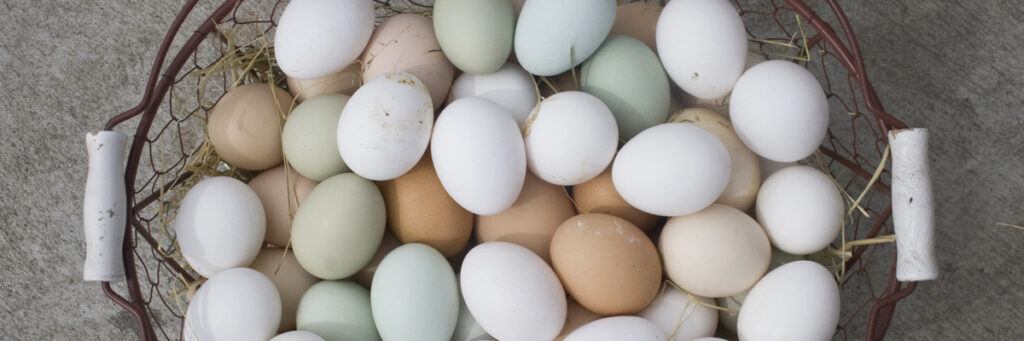
The most common reason people give for becoming backyard chicken farmers is the eggs. With growing concern over what goes into our food supply and some of the abhorrent conditions on factory farms, people are taking back control of their food production