

Disclosure: This post may contain affiliate links. If you purchase through these links, I may earn a small commission at no extra cost to you.
If your chicken coop smells bad, looks messy, or starts attracting flies, it is time to clean it. The good news is that cleaning a chicken coop is not complicated. Once you have a simple routine, it becomes one of the easiest parts of keeping backyard chickens.
Most beginners either clean too little or make it harder than it needs to be. This guide walks you through exactly what to do, step by step, so you can keep your coop clean without wasting time.
If you are still setting up your coop, start with our Complete Beginner Guide to Raising Chickens, so you have the basics covered before your first deep clean.
What You Need to Clean a Chicken Coop
Before you start, gather a few basic supplies. Nothing fancy, just some things to make the chicken coop setup more organized.
| 🧰 Item | 💡 Purpose |
|---|---|
| Shovel or scoop | Remove old bedding |
| Bucket or wheelbarrow | Carry waste out of coop |
| Brush or scraper | Loosen stuck debris |
| Water hose or spray bottle | Rinse surfaces |
| Mild cleaning solution | Disinfect coop |
| Fresh bedding | Replace old material |
If you are unsure what bedding to use, see our guide to chicken coop bedding for beginners, which breaks down the best options.
How Often Should You Clean a Chicken Coop
Most coops follow a simple schedule.
- Light cleaning once per week
- Full cleaning once per month
- Deep cleaning twice per year
Hot weather, rain, or a crowded coop may require more frequent cleaning.
If your coop smells strong or feels damp, do not wait. Clean it promptly to prevent respiratory illness in your flock.
Step-by-Step: How to Clean a Chicken Coop
This process is simple and repeatable. Once you get a regular cleaning schedule going, you’ll be surprised at how easy it is to keep a backyard chicken flock.
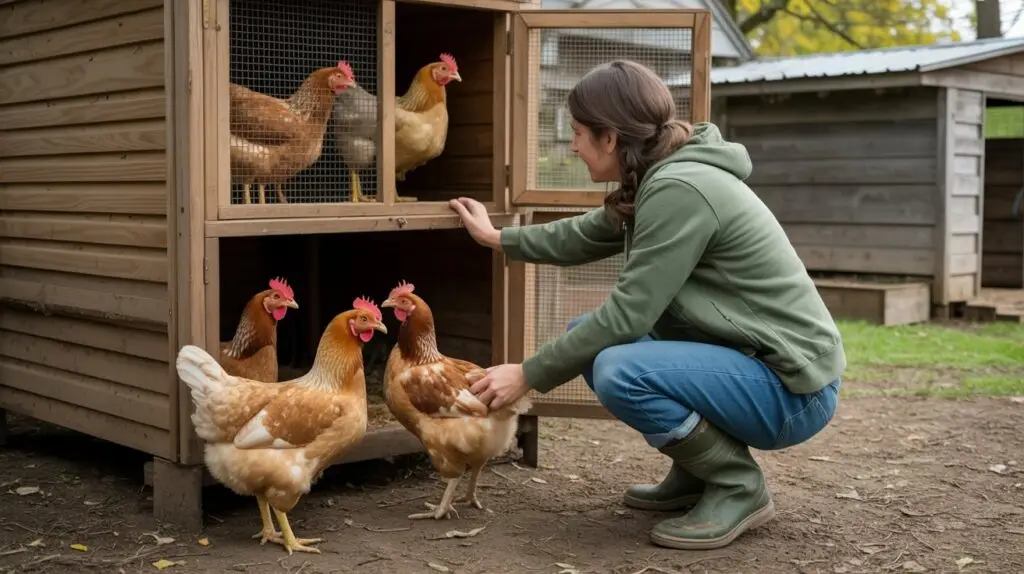
Step 1: Remove the Chickens
Let your chickens out into the run or yard.
This gives you space to work and keeps them from getting in the way.
Step 2: Remove Old Bedding
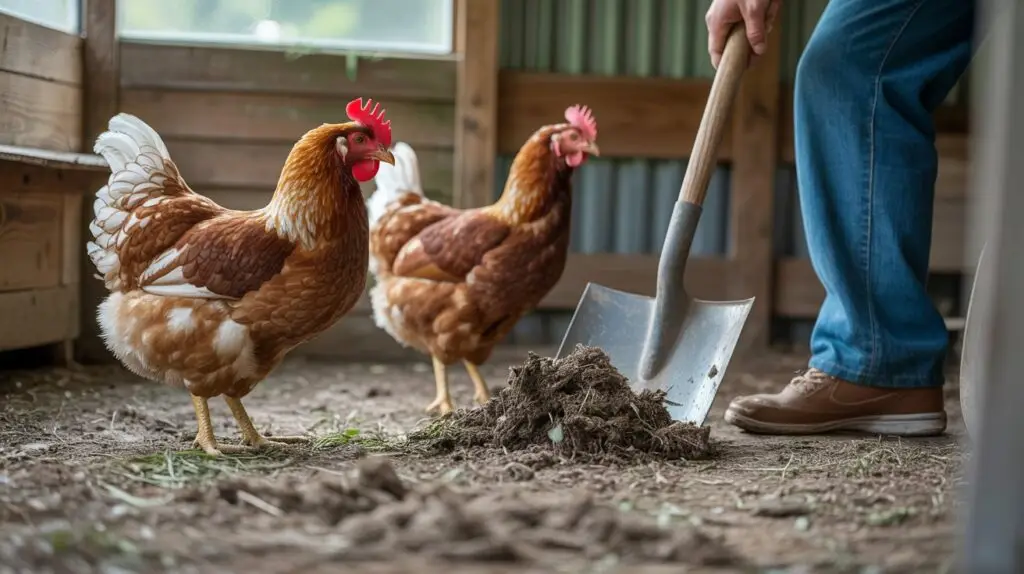
Use a shovel or scoop to remove all bedding from the coop floor and nesting boxes.
Place it in a bucket or wheelbarrow.
If you have a garden, there’s no better use for old bedding than a compost pile. Learn more about what to do with all that chicken poop in my What to Do with Chicken Poop and Coop Waste (Beginner Guide).
Step 3: Scrape and Brush Surfaces
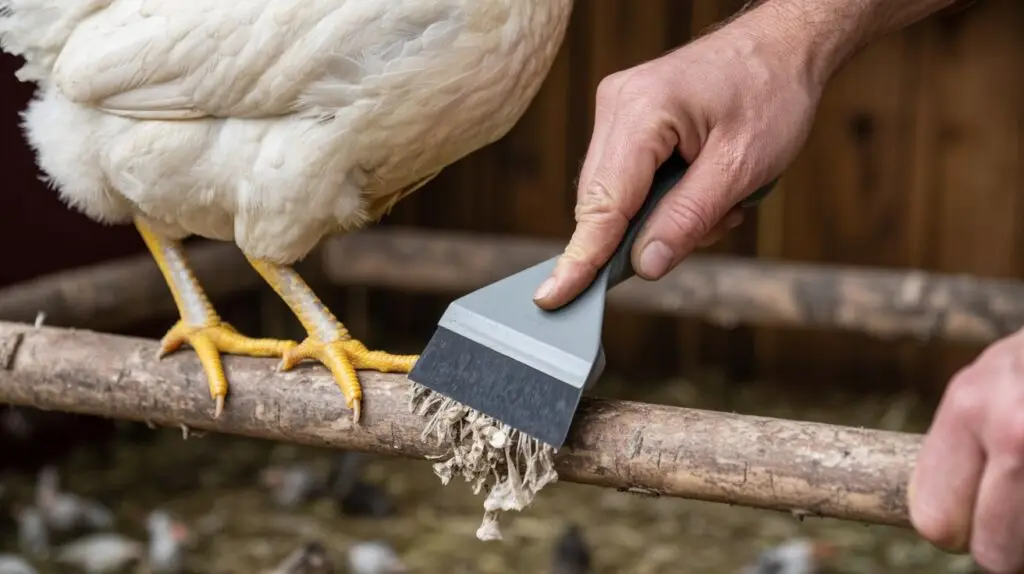
After removing bedding, you will notice stuck droppings and debris. Use a scraper or brush to loosen anything stuck to the coop floor, roosting bars, and nesting boxes. This step makes a big difference in cleanliness.
Step 4: Clean and Rinse
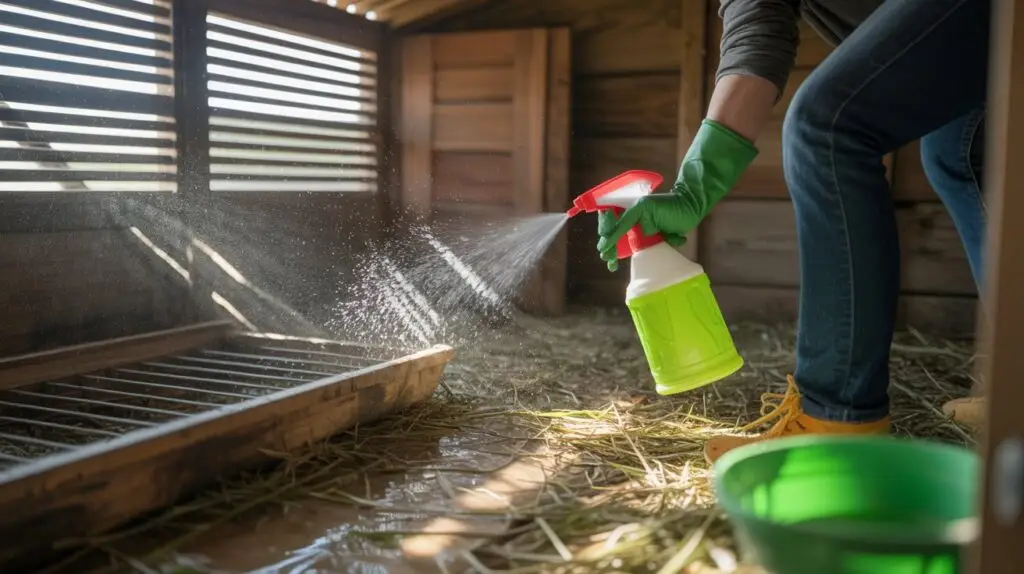
Lightly spray down surfaces with water, then apply a mild cleaning solution. A simple 1:1 ratio mix of water and vinegar works well for most backyard coops. Or you can purchase a specially formulated chicken coop cleaner and deodorizer.
Avoid harsh chemicals, as chickens are sensitive to strong fumes.
Step 5: Let the Coop Dry Completely
This step is the most important for maintaining your chickens’ health.
Do not add new bedding until the coop is fully dry. Moisture is the main cause of odor and bacterial buildup.
Never put fresh bedding into a damp coop.
Dry conditions are the key to controlling smell and keeping your chickens healthy.
Step 6: Add Fresh Bedding
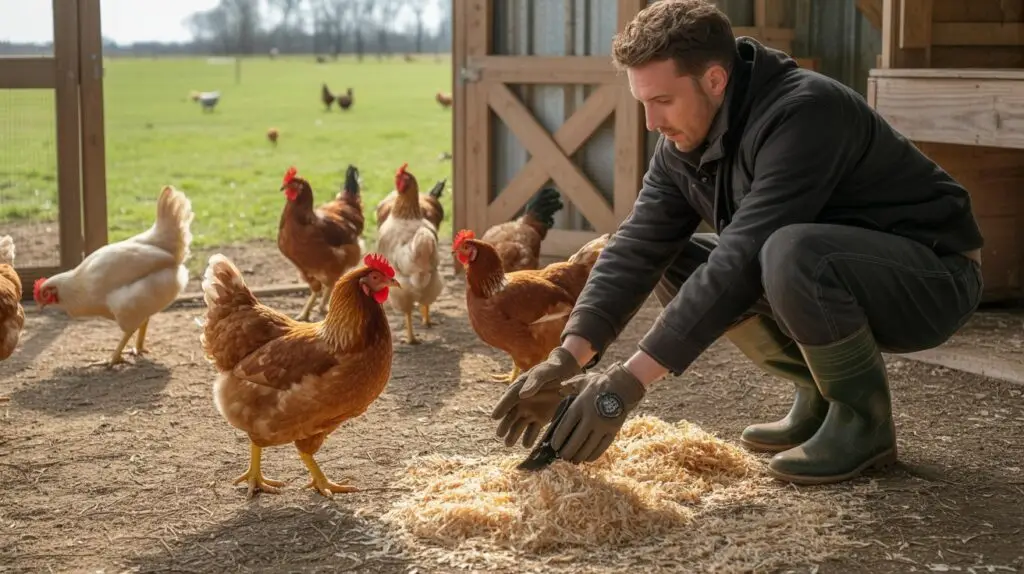
Spread a fresh layer of bedding across the coop floor and inside the nesting boxes. Most coops do well with about 3 to 4 inches of bedding. Bedding should be deep enough for your hens to scratch around, rearrange, and roll around in. Once a week, scoop out soiled bedding and refill to the proper depth. Change out the bedding completely every 2 to 4 weeks, depending on how soiled it is.
To make cleaning easier, consider purchasing nesting mats. These reusable mats are easy to clean and durable, helping prevent hens from scratching the bedding material out of their nesting boxes.
Step 7: Return Your Chickens
Once everything is dry and fresh, let your chickens back into the coop. They will usually start scratching around right away.
Weekly vs Monthly Cleaning Routine
| 🗓️ Task | 🧹 What to Do |
|---|---|
| Weekly | Remove droppings and add fresh bedding |
| Monthly | Remove all bedding and deep clean coop |
Common Mistakes When Cleaning a Chicken Coop
Cleaning mistakes can create more problems than they solve. One common mistake is skipping cleaning for too long. This leads to odor, flies, and unhealthy conditions.
Another mistake is using too much water. Excess moisture can soak into wood and make the coop harder to dry. Always let the coop dry completely before adding new bedding. The best plan of action is to clean the coop early in the morning and keep the chickens out in the run, or let them roam in the yard before putting them up for the night.
Some beginners also use strong chemicals, which can harm chickens. Your best bet is to use a 1:1 vinegar-and-water solution to clean and disinfect your chickens’ home.
How to Keep Your Coop Clean Longer
There are a few simple habits that make cleaning much easier.
- Use the right bedding
- Keep bedding dry
- Maintain good airflow
- Avoid overcrowding
If you want to improve your setup, check out our chicken coop bedding guide, which explains how bedding affects cleanliness.
Frequently Asked Questions
How long does it take to clean a chicken coop?
A full cleaning usually takes 30 minutes to an hour, depending on coop size.
Can I use bleach to clean a chicken coop?
It is not recommended for routine cleaning. Mild solutions like vinegar are safer.
What do I do with old bedding?
You can compost it or dispose of it with yard waste.
Why does my coop still smell after cleaning?
This is usually caused by moisture or poor ventilation.
Final Thoughts
Cleaning a chicken coop does not have to be difficult. Once you follow a simple routine, it becomes quick and predictable.
A clean coop means healthier chickens, cleaner eggs, and a better overall experience. Stay consistent, keep things dry, and your coop will stay in great shape.